清乾隆 珐琅彩花鸟蒜头瓶
作品介绍
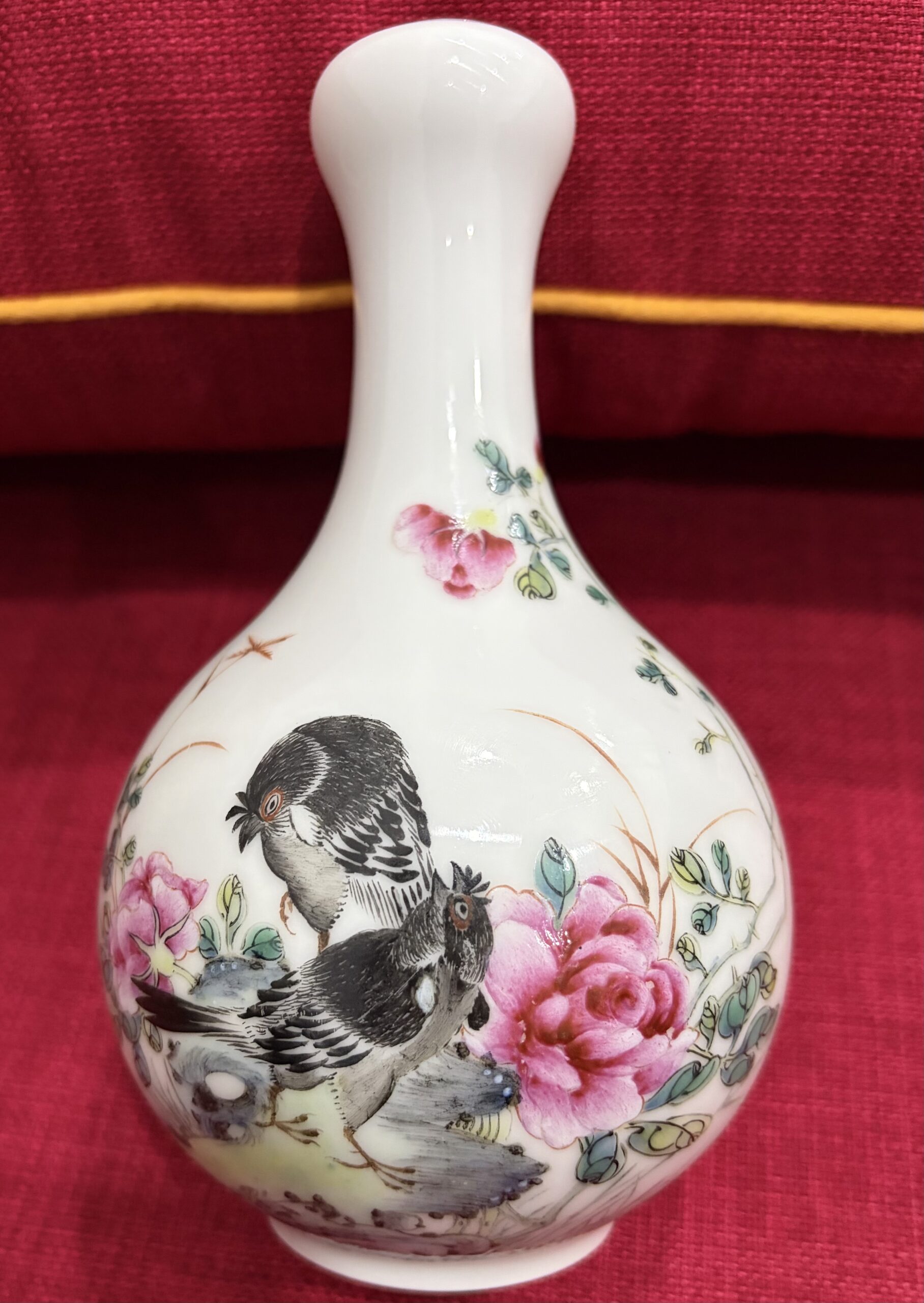
本件蒜头瓶为清代乾隆时期宫廷珐琅彩瓷器之典型代表,器形端庄典雅,比例协调,制作精审。瓶口外侈,颈部修长,呈蒜头形,腹部圆润饱满,下承圈足,线条过渡自然流畅,体现乾隆朝御用陈设瓷在形制设计上所追求的内敛与均衡之美。
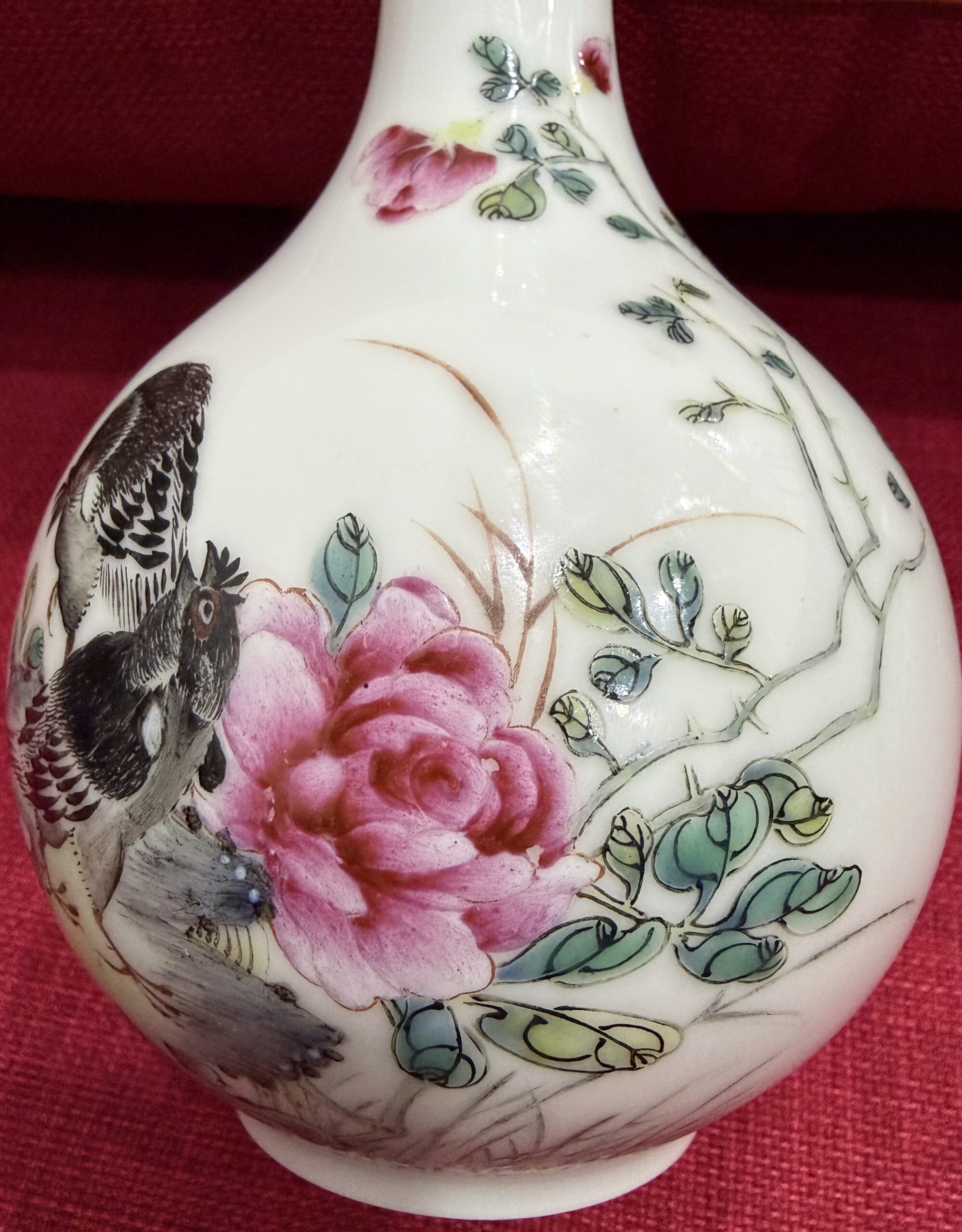
通体以细白釉为地,其上施以珐琅彩绘。腹部绘花鸟图景,枝叶舒展,花卉丰茂,禽鸟姿态生动,敷色清润而层次分明。彩料温润含蓄,呈现低温珐琅反复烧成后特有的柔和光泽,设色与釉面融洽自然,尽显宫廷造办处高等级工艺水准。
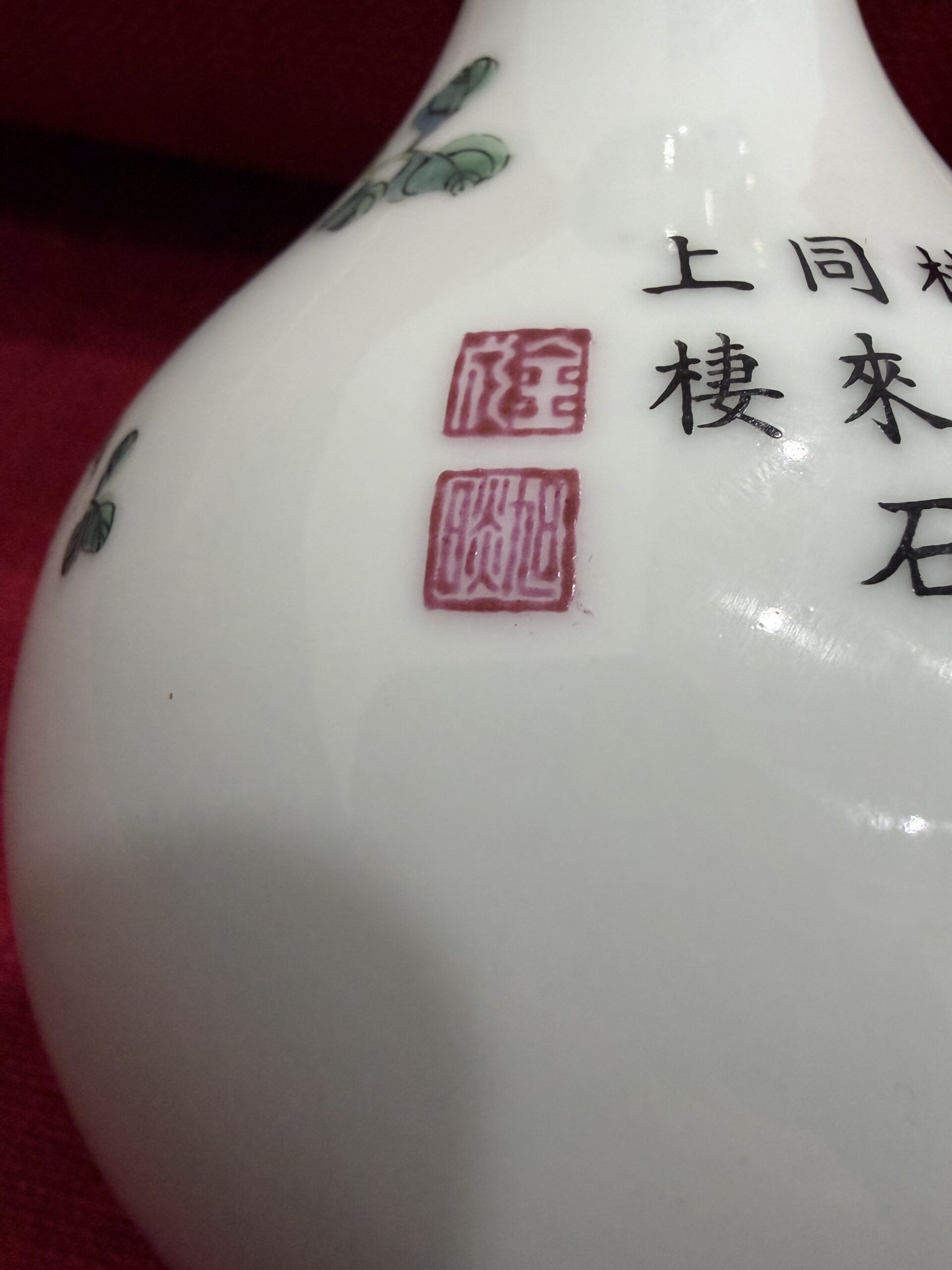
画面一侧配以墨书题诗,并鈐朱文、白文印章数方,将宫廷工艺与文人审美融为一体。此类“诗、书、画、印”合璧的装饰方式,正是乾隆时期宫廷艺术的重要风貌之一,反映出皇帝本人对文人文化的推崇以及对器物审美意趣的高度参与。
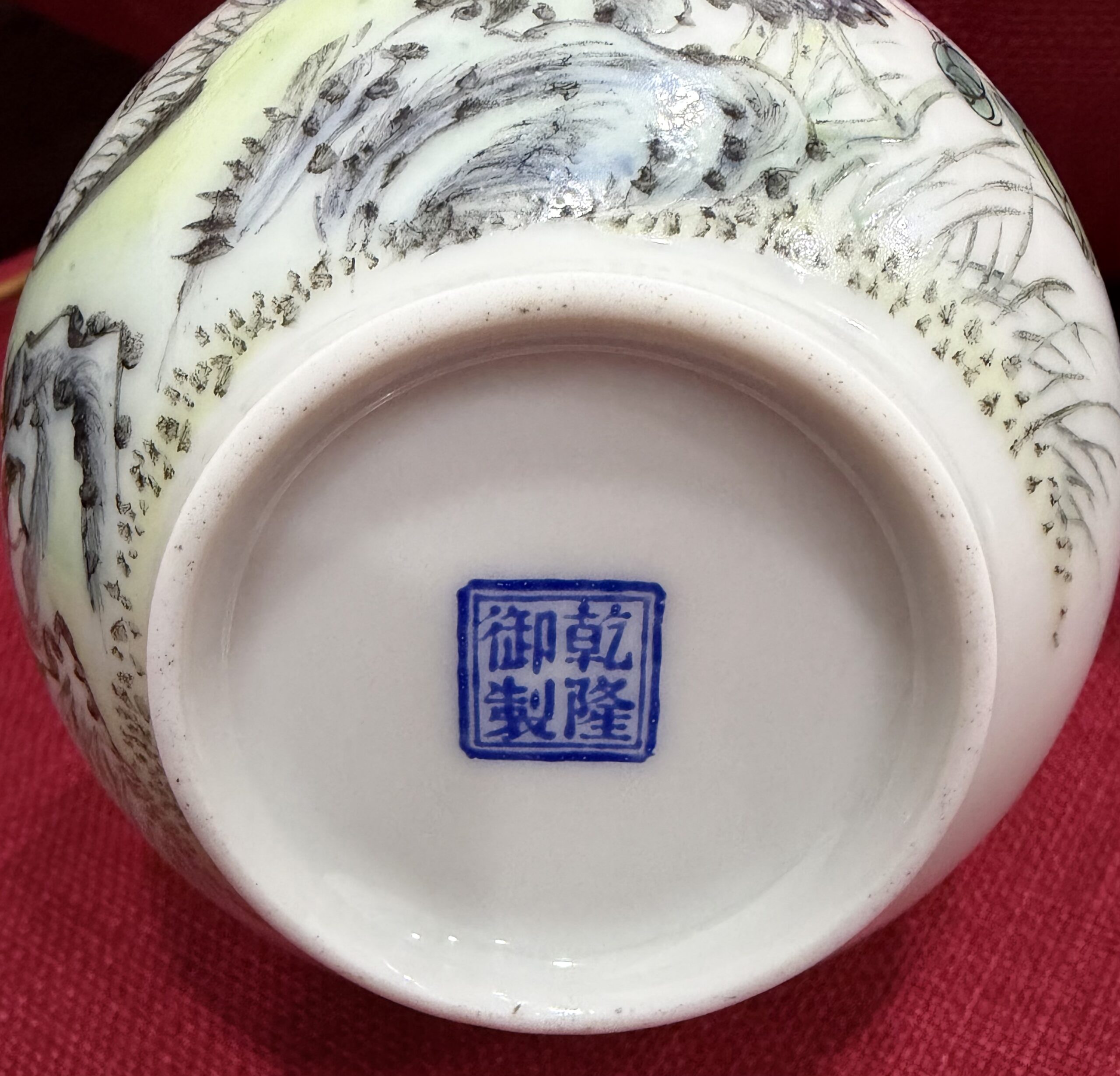
器底以青花书“乾隆御制”四字方框款,笔意端正凝练,布局严谨,与器物整体气息和工艺层级相契合。足部修治规整而不失自然,胎釉老化一致,釉色温雅,保存状态良好。
珐琅彩为清代宫廷瓷器中等级最高、制作最为繁复的品类之一,其工序需在景德镇烧成白釉素胎后,再送入宫廷珐琅作低温彩绘与多次烧制完成,数量稀少,专供内廷陈设与赏玩。蒜头瓶作为陈设器形,寓意丰盈吉祥,常见于宫廷空间与御案清供之中。
此器尺寸虽不宏大,却愈显精巧含蓄,体现乾隆朝审美由宏丽转向精致、由外张归于内敛的发展趋势,具有重要的艺术价值与时代意义。
本作は清・乾隆期の宮廷ファランツァイ(琺瑯彩)を代表する蒜頭瓶であり、端正な器形と均整の取れたプロポーション、精緻な作行が際立つ。口縁は外反し、頸部はすらりと伸びて蒜頭形を成し、胴はふくらみ豊かで、端正な高台へと自然に繋がる。乾隆朝の御用陳設磁器が追求した抑制と均衡の美が凝縮されている。
緻密な白釉を地とし、その上に低温焼成の琺瑯彩で花鳥文を描く。枝葉は伸びやかに、花は瑞々しく、禽鳥は生気に満ち、彩色は清潤で階調が明確。彩料は温雅にして含蓄を湛え、反復焼成ならではの柔らかな艶と、釉面との自然な馴染みが見どころである。
画面の一側には墨書の題詩を配し、朱文・白文の印章を捺して、宮廷工芸と文人趣味を融合させた。「詩・書・画・印」合璧の装飾は乾隆宮廷芸術の重要な風貌を示し、皇帝の文人文化への嗜好と美意識の介入を映し出す。
底部には青花方框の「乾隆御制」款を記し、筆意は端正で緊密、構成は厳格。全体の気韻と工芸の格調に呼応する。高台周りの仕上げは整いながら自然味を失わず、胎・釉の経年感も一貫しており、状態は良好である。
ファランツァイは清代宮廷磁器の中でも最上位に位置し、景徳鎮で白釉素地を焼成した後、宮廷の琺瑯作で上絵付と複数回の低温焼成を経て完成する。制作数は少なく、主として内廷の陳設・賞玩に供された。蒜頭瓶は吉祥と豊穣を象徴する陳設器形として、宮廷空間や御案清供に親しまれた。
本作は大作ではないが、むしろ精巧さと含蓄が際立ち、乾隆朝の美意識が「豪奢」から「精緻」へと移行し、外に張る華麗さから内に収斂する気品へと向かった潮流を体現する。
This garlic-head vase represents a quintessential example of Qianlong-period imperial painted enamels (falangcai). Its dignified silhouette, balanced proportions, and meticulous workmanship speak to the refined standards of court display porcelain. The mouth gently flares, the slender neck forms the characteristic “garlic-head” profile, and the rounded body descends into a neatly finished foot, creating a harmonious and restrained elegance.
Set against a finely glazed white ground, the vase is decorated in overglaze enamels with a bird-and-flower composition. Branches unfold with ease, blossoms appear lush, and the bird is rendered with vivid presence. The palette is fresh yet nuanced, exhibiting the soft luster typical of repeatedly fired low-temperature enamels and a natural integration with the glaze surface—hallmarks of high-level palace craftsmanship.
Along one side, an ink inscription is accompanied by several red seals, achieving a unified “poetry, calligraphy, painting, and seals” aesthetic. Such a literati-inflected mode of decoration was a defining feature of Qianlong court taste, reflecting the emperor’s admiration for literati culture and his active engagement in the artistic character of objects made for the inner court.
The base bears a blue-and-white square mark reading “Qianlong yuzhi” (Made under Imperial Order of Qianlong). The calligraphy is compact and disciplined, and the layout is rigorous, corresponding to the vessel’s overall tone and status. The foot is neatly finished without losing a sense of naturalness; the aging of body and glaze remains coherent, and the object is well preserved.
Falangcai ranks among the most prestigious and technically demanding categories of Qing imperial porcelain. Typically, a white-glazed blank was first fired at Jingdezhen, then enamel-painted and repeatedly re-fired at low temperature within palace workshops. Produced in limited quantities, such wares were reserved for court display and connoisseurship.
Although modest in scale, this vase amplifies a sense of exquisite restraint, embodying the Qianlong shift from grand splendor to refined precision, and from outward opulence to inward poise—an object of notable artistic and historical significance.
- 年代
- 清代 · 乾隆时期(1736–1795)
- 器类
- 珐琅彩 · 蒜头瓶
- 尺寸
- 通高 17 cm
- 款识
- 青花方框“乾隆御制”款
- 保存状态
- 整体保存良好(以实物检视为准)
- 価格
- ¥ 12 億円